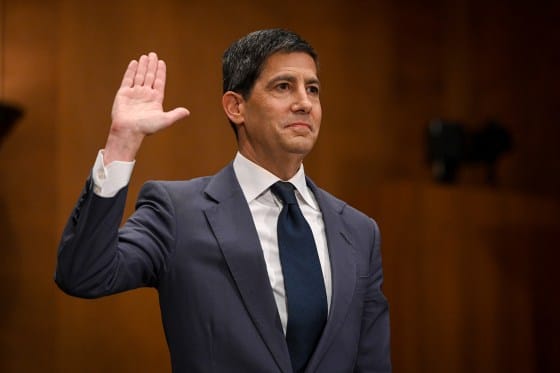
Bitcoin declined sharply after the Senate confirmed Kevin Warsh as the new Chairman of the Federal Reserve on May 13, 2026. The price fell from around $78,000 to below $76,000, wiping out gains and triggering over $600 million in liquidations.
This reaction reflects market uncertainty about future monetary policy under the new Fed leadership.
Who is Kevin Warsh?
Kevin Warsh, a former Fed Governor (2006–2011), is known for his cautious approach to inflation and preference for a smaller Federal Reserve balance sheet. He previously served as an economic advisor during the Trump administration and is considered more aligned with current White House thinking than his predecessor Jerome Powell.
His confirmation passed narrowly (54-45), showing deep political divisions over monetary policy.
Why Did Bitcoin Price Fall?
- Hawkish Policy Signal Markets expect Warsh to prioritize inflation control and may delay rate cuts. Higher interest rates for longer make risk assets like Bitcoin less attractive.
- Uncertainty During Transition Bitcoin often sells off during major Fed leadership changes as investors reassess risk.
- Stronger Dollar Reduced expectations for rate cuts strengthened the US Dollar, pressuring Bitcoin and other high-beta assets.
- Sell the News Event Many traders who bought on rumors of the appointment sold after the news was confirmed.
Expectations from Kevin Warsh as Fed Chair
- Strong focus on bringing inflation back to the 2% target.
- Support for gradual reduction of the Fed’s balance sheet.
- Maintaining Fed independence while being pragmatic.
- Optimism around AI-driven productivity helping control inflation long-term.
Overall, Warsh is viewed as pragmatic but more hawkish than markets had hoped in the short term.
Bitcoin as a Strategic Asset
Despite the short-term drop, Bitcoin’s role as a strategic asset continues to grow:
- Inflation Hedge: With massive government debt worldwide, Bitcoin’s fixed supply of 21 million coins makes it a strong store of value.
- Geopolitical Hedge: Nations like the US (Strategic Bitcoin Reserve) and others are treating Bitcoin as a reserve asset.
- Portfolio Diversifier: Institutions increasingly allocate to Bitcoin for its low correlation with traditional markets during certain cycles.
- Long-term Scarcity: The upcoming 2028 halving will further reduce new supply, strengthening the bullish case.
For Indian investors, Bitcoin offers protection against rupee depreciation, capital controls, and global monetary uncertainty.
Outlook: Short-Term Pressure, Long-Term Opportunity
The current dip appears driven by policy uncertainty and profit-taking. Historically, Bitcoin has recovered strongly after Fed-related corrections once clarity emerges.
Key Takeaway: Kevin Warsh’s appointment created short-term headwinds for Bitcoin, but it does not change the long-term fundamentals. Bitcoin is transitioning from a speculative asset into a recognized strategic reserve asset in an uncertain global financial system.
Investors focused on self-custody and long-term holding remain well-positioned.
FAQ
Q1. Will Bitcoin keep falling under Kevin Warsh? Short-term volatility is possible, but long-term outlook remains strong due to scarcity and adoption.
Q2. Is Bitcoin still a good inflation hedge? Yes. Its fixed supply makes it attractive during periods of high government debt and money printing.
Q3. Should Indians buy Bitcoin now? Dollar Cost Averaging (DCA) remains the safest strategy. Only invest money you can afford to hold long-term.
Q4. How does the Fed Chair impact Bitcoin? Monetary policy affects liquidity. Hawkish policy can create short-term pressure, while dovish policy generally supports Bitcoin.
Disclaimer: This article is for informational and educational purposes only. It does not constitute financial advice. Cryptocurrency investments are highly volatile. Always do your own research. Always consult with a Bitcoin Consultant before making any move in bitcoin.
