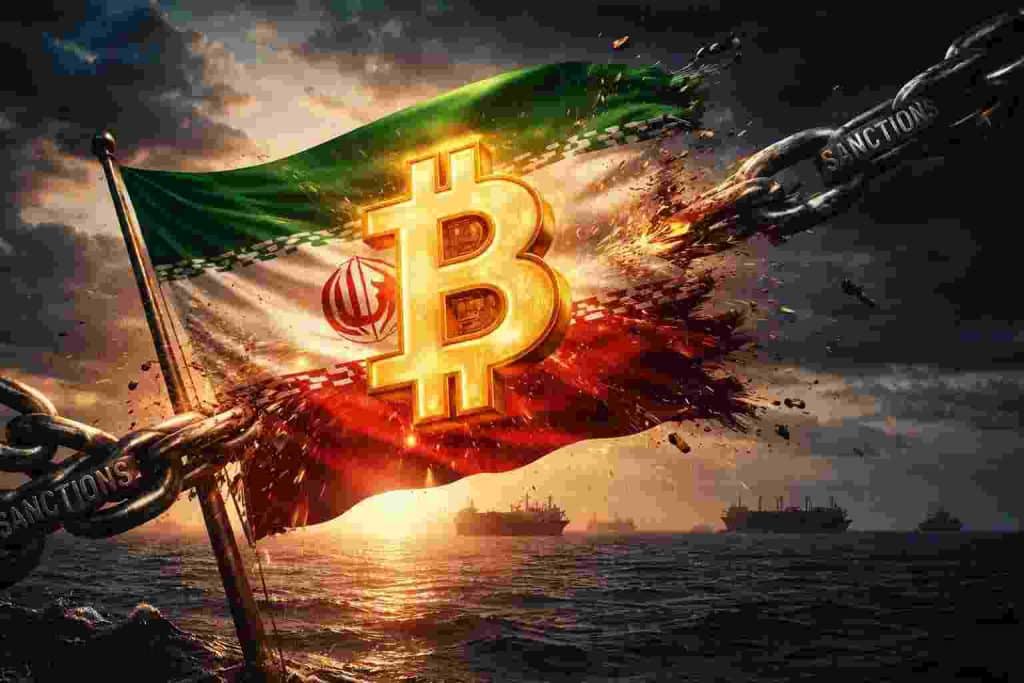
Iran’s Strategic Shift to Bitcoin
In 2026, Iran has begun actively preferring Bitcoin for critical international transactions — most notably for maritime insurance and potential toll payments in the Strait of Hormuz.
This is not a random decision. It represents a calculated move to achieve sanctions resistance, national sovereignty, and financial freedom in a world where traditional finance is heavily weaponized.
Why Iran Rejected USD, Stablecoins & Centralized Digital Gold
1. Brutal Reality of Sanctions The United States has imposed some of the harshest sanctions in history on Iran. Traditional banking channels (SWIFT) and even dollar-pegged stablecoins like USDT (Tether) have become unreliable. Tether has frozen large amounts of USDT linked to Iranian entities under US pressure.
Bitcoin, by design, cannot be frozen at the protocol level.
2. Sovereignty Over Money
- Fiat currencies (especially USD) give America extraterritorial control over other nations’ trade.
- Stablecoins like USDT and USDC are issued by private companies that ultimately answer to US regulators.
- Bitcoin is the only major asset that offers true monetary sovereignty — no central issuer, no single government can control or censor it.
For a country like Iran, which has faced asset freezes and payment blockades for decades, Bitcoin represents a neutral, borderless money that restores sovereignty.
3. Freedom from Financial Weaponization Iran views the US-dominated financial system as a tool of economic warfare. By adopting Bitcoin, Iran is reducing its dependence on systems it cannot control. This gives the country:
- Freedom to trade with any willing partner (China, Russia, India, etc.)
- Freedom from sudden account freezes
- Freedom to convert its energy resources into a globally accepted hard asset
How Bitcoin Transforms Iran’s International Trade
- Strait of Hormuz Insurance & Tolls: Iran launched a Bitcoin-based insurance platform called “Hormuz Safe”. Payments are settled directly in BTC, bypassing Western banks entirely.
- Oil Trade: Bitcoin enables faster, cheaper, and sanctions-resistant settlement for oil exports.
- Mining as Strategic Tool: Iran uses its cheap electricity to mine Bitcoin, effectively turning surplus energy into a portable, globally tradable asset.
This shift from dollar/stablecoin dependence to Bitcoin gives Iran real operational freedom in international commerce.
Global Impact on Bitcoin Adoption
Iran’s embrace of Bitcoin sends a powerful message to the world:
- Sanctions Resistance: Bitcoin works even when a country is cut off from the global banking system.
- Sovereignty: Nations can reclaim monetary independence using decentralized money.
- Freedom: Bitcoin offers an opt-out from weaponized finance.
This move is being closely watched by other countries facing sanctions or de-dollarization pressures (Russia, Venezuela, and several African nations). It strengthens Bitcoin’s position as digital gold and a tool for financial sovereignty.
For India: Iran’s strategy highlights why self-custody Bitcoin can act as a hedge against geopolitical risks and currency controls — lessons relevant for Indian businesses and individuals seeking financial independence.
Final Thoughts
Iran did not choose Bitcoin for speculation. It chose Bitcoin for survival, sovereignty, and freedom.
In an era where money itself has become a weapon, Bitcoin offers a peaceful, decentralized alternative that no single nation can dominate. Iran’s pivot may be one of the most important nation-state validations of Bitcoin yet.
FAQ
Q1. Why is Iran moving away from USDT? Because stablecoins can be frozen by issuers under US sanctions pressure.
Q2. How does Bitcoin help Iran’s sovereignty? It removes dependence on foreign banking systems and gives full control over its money.
Q3. Is this good for global Bitcoin adoption? Yes. It proves Bitcoin works as neutral money even under extreme sanctions.
Q4. Can other countries follow the same path? Many sanctioned and de-dollarizing nations are already studying Iran’s model.
Disclaimer: This article is for educational and informational purposes only. It does not constitute financial, political, or investment advice.
